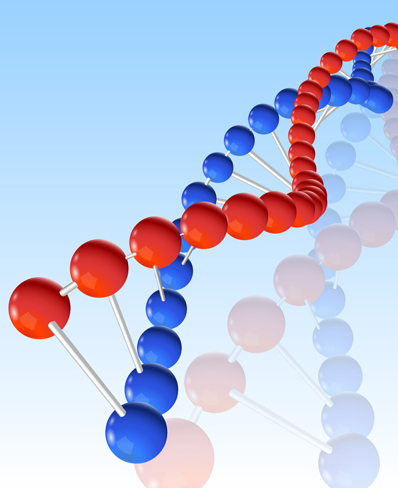
[As reported by The University of Washington] “Scientists have discovered a second code hiding within DNA. This second code contains information that changes how scientists read the instructions contained in DNA and interpret mutations to make sense of health and disease.
Genome scientist Dr. John Stamatoyannopoulos led a team that discovered a second code hidden in DNA.A research team led by Dr. John Stamatoyannopoulos, University of Washington associate professor of genome sciences and of medicine, made the discovery. The findings are reported in the Dec. 13 issue of Science.”

[From I Fucking Love Science] “One of the latest missions from the ISS is kind of amazing. The High Definition Earth Viewing (HDEV) experiment consists of four cameras that have been attached outside of the ISS. Though temperature is controlled, the cameras are exposed to the radiation from the sun, which will allow astronauts to understand how radiation affects the instruments.
The experiment is being run in conjunction with High Schools United with NASA to Create Hardware (HUNCH) program that serves as outreach for students 9-12. Students participating in this program also helped design some aspects of the camera.
The cameras point down at Earth at all times, which makes for some breathtaking images. The feed will sometimes go down as the signal switches between the cameras, and it is hard to see when the ISS is on the dark side of the planet. If the cameras are down, the screen will be grey.
Watch the live stream here…”
[From this article at Wired] ‘One of agricultural biotechnology’s great success stories may become a cautionary tale of how short-sighted mismanagement can squander the benefits of genetic modification.
After years of predicting it would happen — and after years of having their suggestions largely ignored by companies, farmers and regulators — scientists have documented the rapid evolution of corn rootworms that are resistant to Bt corn.
Until Bt corn was genetically altered to be poisonous to the pests, rootworms used to cause billions of dollars in damage to U.S. crops. Named for the pesticidal toxin-producing Bacillus thuringiensis gene it contains, Bt corn now accounts for three-quarters of the U.S. corn crop. The vulnerability of this corn could be disastrous for farmers and the environment.
“Unless management practices change, it’s only going to get worse,” said Aaron Gassmann, an Iowa State University entomologist and co-author of a March 17 Proceedings of the National Academy of Sciences study describing rootworm resistance. “There needs to be a fundamental change in how the technology is used.”’
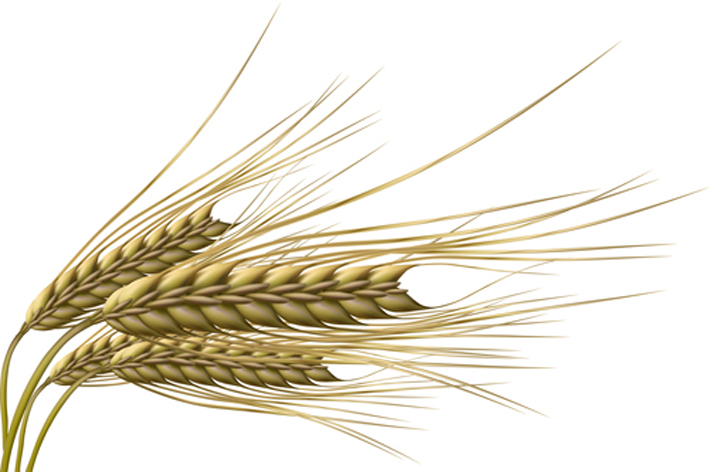
[Via the ABC’s Radio National] “The West Australian Supreme court will commence hearing a test case that has farmers around Australia and even across the world on the edge of their tractor seats.
It involves a farmer Steve Marsh who lost his organic certification when GM canola seeds from his neighbour’s crop sprouted on his land.
Steve Marsh has sued his neighbour for the economic loss that accompanied his loss of certification.”

#PRISOM, A Synthetic Reality Surveillance Game
So we (meaning Mez Breeze Design) can finally let the (Schrödinger’s?) cat out of the very tightly zipped bag: we’re *extremely* excited to officially announce our latest co-production with Dreaming Methods: “#PRISOM“. #PRISOM is a Synthetic Reality Game where a player is set loose in a Glass City under infinite surveillance. Will you be brave enough to enter?
The project is making its début at (and is funded by) the “MARart4 Transreal Topologies Exhibition” as part of #ISMAR2013, the International Symposium on Mixed and Augmented Reality in conjunction with SA Uni’s Wearable Computer Lab. So if you’re keen to don a HMD (Head-Mounted Display) and throw yourself into #PRISOM, head to the Adelaide City East Campus of the University of South Australia on October 1-4th.